Myth, Art & Carbochemistry - Welcome to black-tech
⚒ Glückauf! ⚒
black-tech is a place where art grows out of industrial experience.
Electronic music, drawing, painting and photography are based on impressions from coking plants and steelworks:
sites I have been closely connected to for many years. The works emerge from observation, memory and a personal affinity with these
facilities, going beyond pure documentation.
The content expands continuously.
It forms a personal archive of industrial culture in the Ruhr area, combining technical reality with an individual perspective.
New works and materials are added over time, preserving an industry that is often overlooked but remains of great importance to me.
A Plea for an Underrated Pillar of Industry
Coke plants are often seen in public debate as relics of a bygone era. Anyone who looks at these imposing facilities: the coal towers, the conveyor bridges,
the intricate pipework of the by product plant, the rising clouds of steam and the characteristic sounds of the charging and quenching cars, is quick to
judge. Yet behind this rugged exterior lies one of the most precise engineering feats of our time and a foundation upon which our modern daily lives rest.
The Paradox of Our Comfort
We live in a society that demands a rapid departure from coal while simultaneously relying on products that could not exist without it. Rails, bridges, vehicles,
the rotors of wind turbines: steel remains the backbone of modernity.
Hydrogen based direct reduction is promoted as a universal remedy, but the physical reality is far more complex:
The scale problem: The required volumes of pure green hydrogen are astronomical.
The energy footprint: Producing it consumes immense amounts of energy and would blanket entire landscapes with wind turbines. An intervention rarely discussed openly.
Technological change is necessary. But it cannot be built on wishful thinking. A realistic transition requires decades of parallel operation rather than dismantling
functioning blast furnaces and coke plants prematurely. As long as the green alternative remains largely theoretical, the classical blast furnace route, supported
by high quality coke, continues to carry the industrial load.
Resource, Not Waste
Modern coke plants are not the sooty backyard industries of the 19th century. They are highly complex circular systems. Coke oven gas and coal tar are valuable sources of aromatics and hydrogen:
substances that can only be produced synthetically with extreme energy expenditure.
Integrated plants such as the Schwelgern Coke Plant demonstrate through single-chamber pressure control that high-tech industry and emission protection can work hand in hand.
Why This Site Exists
black-tech.de is not industrial lobbying. This platform grew from more than 30 years of autodidactic passion: independent, free, driven by curiosity and
a deep connection to an industrial culture that has accompanied me since childhood.
Above all, it is an expression of my particular closeness to coke plants. Their aesthetics, their logic, their atmosphere: technically fascinating, visually overwhelming,
emotionally familiar.
It is a visual and acoustic documentation of a world that is far more than its reputation. An invitation to look more closely.
Coke Plants and Steelworks in the Ruhr Area
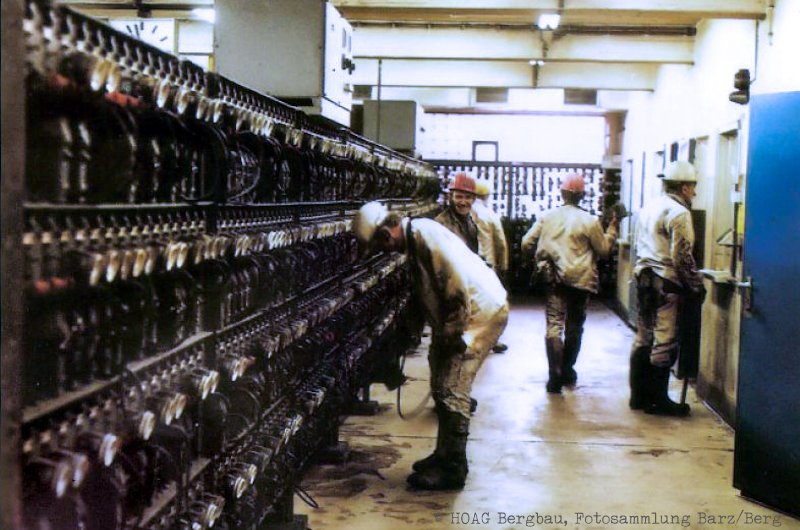
Mining is history. Yet there are still places with the sites of heavy industry:
Duisburg with thyssenkrupp Steel, HKM and the Schwelgern Coke Plant. Bottrop with the Prosper Coke Plant.
 Rail transport
Trams in the Ruhr Area
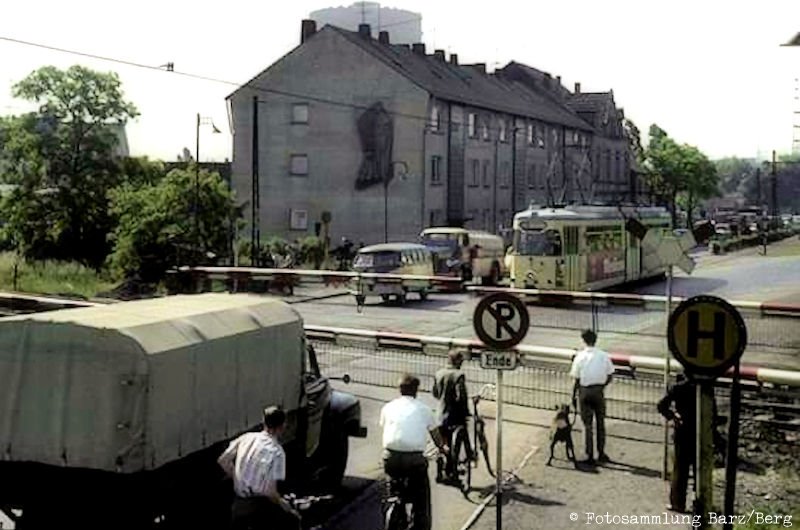
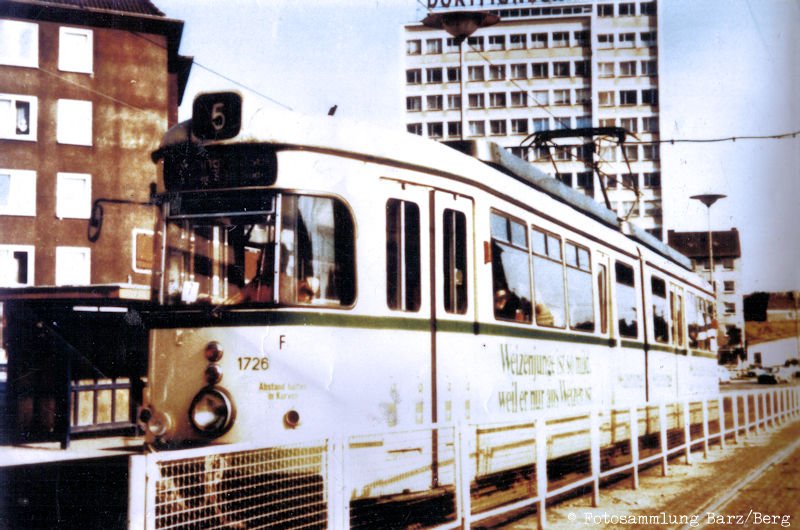
The Ruhr region once had the largest contiguous metre-gauge tram network in Europe. It connected the cities like arteries of an industrial landscape - from Herten through Gelsenkirchen, Bochum and Witten, from Recklinghausen to Oberhausen.
For decades, the tram shaped the everyday life of industrial workers. Today the network is smaller, but a ride is still worthwhile: it opens unique perspectives on city, industry and history.
Further information, publications and reprints of historical track maps can be found at SBB-Verlag Dortmund, for whose projects I have colorized historical photographs.